What Is Tuckpointing?
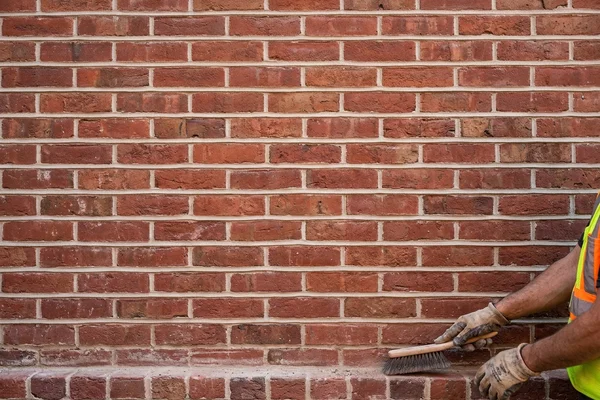
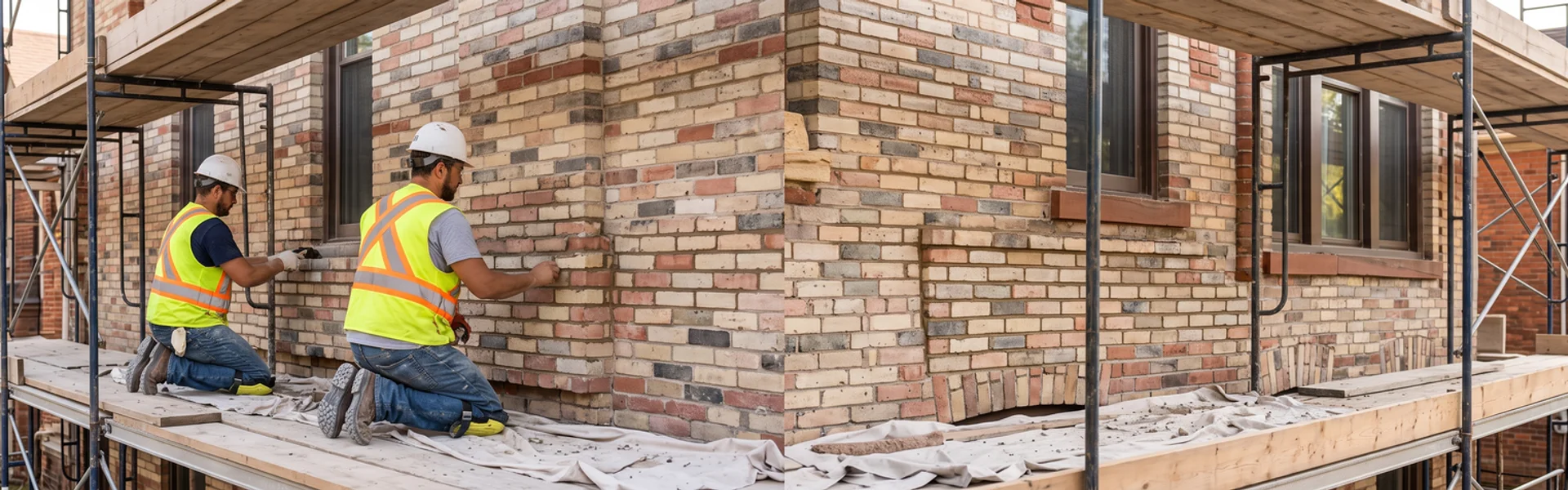
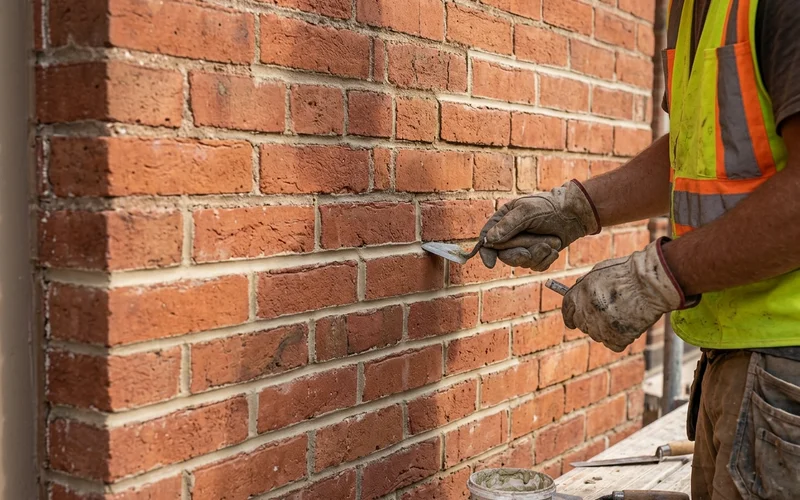
Tuckpointing is a joint-finishing technique that makes brickwork look crisp and even. The joint is filled with mortar coloured to match the brick, then a thin, contrasting line of lime putty or fine mortar, the “tuck”, is applied down the centre of the joint. The result is sharp, straight lines that make irregular old brick look neat.
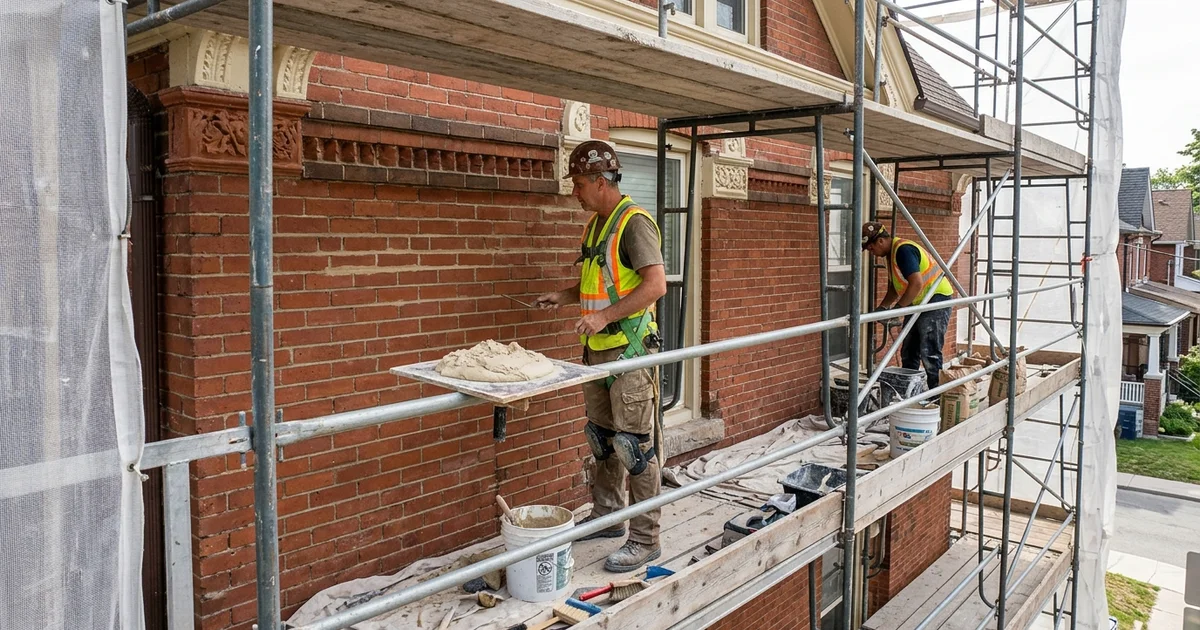
Many Toronto Victorian and Edwardian homes were finished this way, especially bay-and-gable fronts in Old Toronto and Cabbagetown and grander houses in Rosedale. Over a century of weather and patch repairs, those fine lines disappear. Tuckpointing brings them back.
Tuckpointing vs Repointing
| Repointing | Tuckpointing | |
|---|---|---|
| Purpose | Stop water entering failed joints | Restore the original look of fine joints |
| Joint finish | Flush or concave | Ribbon or bead line in contrasting colour |
| Typical walls | Any brick wall with failed mortar | Heritage fronts, feature elevations |
| Cost | Lower | Higher, more hand work |
Most walls need repointing first. Tuckpointing is the finish layer when you want the facade to look as it did when built.
Lime Mortar for Heritage Brick
Toronto Victorian brick was laid in lime mortar in cream, buff, grey and pink tones. Lime is softer and more breathable than brick, so moisture leaves through the joint. In the 1970s and 80s many houses were repointed in hard grey Portland cement. That cement does not let moisture out and does not move with the brick, so the brick faces crack off instead. We see it every week.
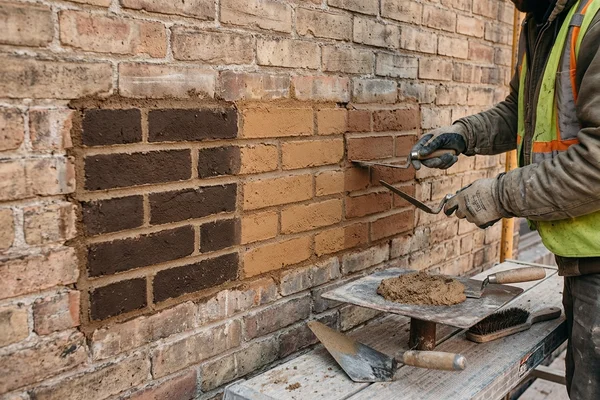
For heritage walls we mix lime putty or NHL 3.5 mortars, or ASTM C270 Type O, coloured with sand and pigment to match. For modern brick, Portland-based Type N is appropriate. The rule is simple: the joint must be softer than the brick.
Sample panel first, every time
Before we point a whole elevation, we mix samples on your wall and let them cure. You approve the colour in daylight, and we archive the recipe so future repairs match.
How We Rake Joints Without Damaging Brick
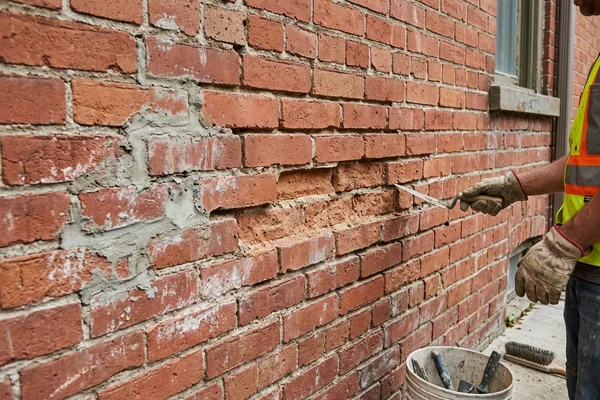
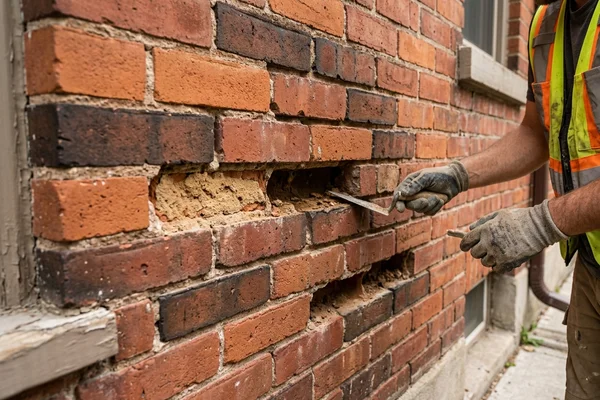
Removing old mortar is where cheap jobs go wrong. Aggressive grinding chips brick edges and widens joints. We rake to a depth of about 2 to 2.5 times the joint width, using hand tools on soft brick and HEPA dust-extracted grinders only where safe. On heritage brick we cut hard cement out carefully so the arrises survive.
Ribbon, Bead and Flush Joints
- Ribbon joint: a flat, raised band of contrasting putty along the joint. Classic on Toronto Victorian fronts.
- Bead joint: a rounded raised line, often on finer pressed brick.
- Flush or concave: standard finishes for repointing and modern walls.
We match the original profile where it survives and recommend one where it does not. For whole-facade projects, see masonry restoration and heritage masonry.
Tuckpointing is a specialty of our Toronto masonry company, with lime-mortar colour matching used as a reference by Toronto Heritage Preservation.