What Does Chimney Repair Involve in Toronto?
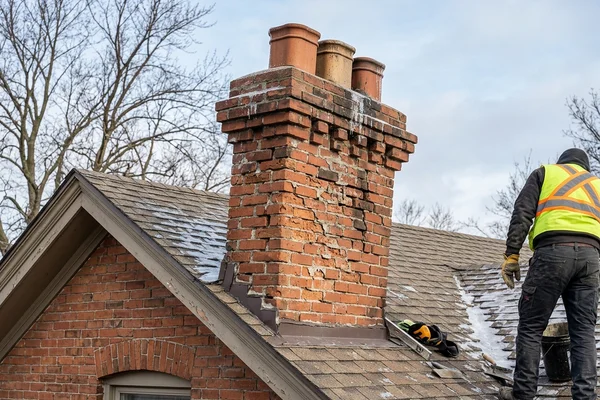
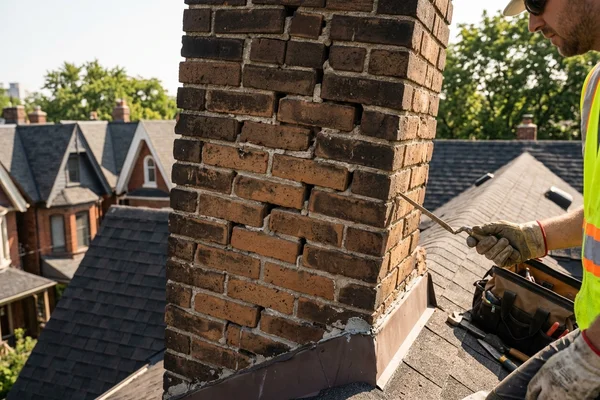
Chimney repair covers everything from the crown at the top of the stack down to where the brick meets the roof. On most Toronto homes the trouble starts in the same place: a thin mortar-wash crown cracks, water gets into the top courses, and each winter of freeze-thaw pushes the brick a little further apart. By the time you see spalling brick faces or bits of mortar in the eavestrough, the damage has usually been building for years.
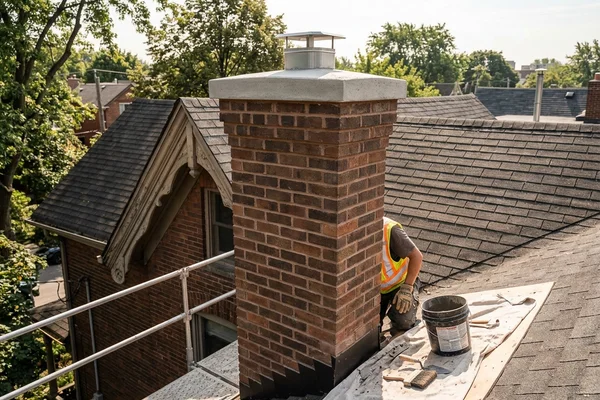
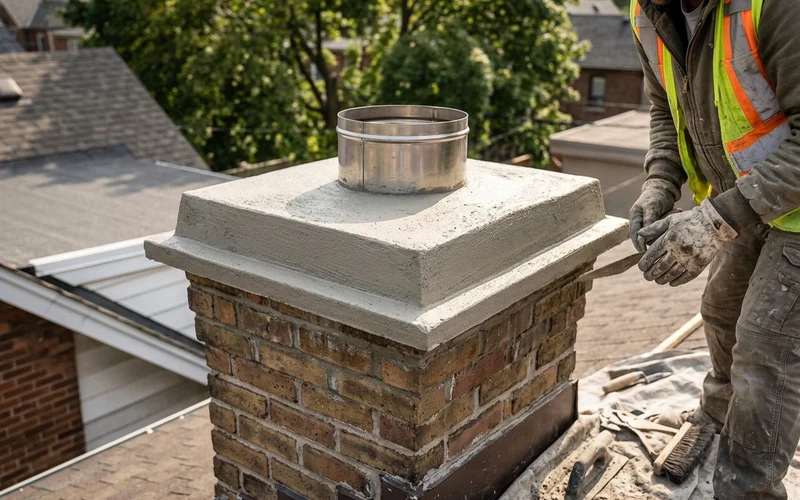
Our work falls into four groups. Crown repair and replacement removes a failed mortar wash and pours a cast-in-place concrete crown that overhangs the brick with a drip edge. Brick and joint repair cuts out spalled units and repoints open joints above the roofline. Liner and flashing work replaces cracked clay liners and resets step and counter flashing so water stops tracking down into the attic. Partial and full rebuilds take the stack down to sound masonry and relay it in matched brick and mortar.
Types of Chimney Repair We Do
| Repair type | When it is the right call | Typical cost (CAD) |
|---|---|---|
| Crown replacement | Cracked mortar wash, brick below still sound | $2,500 - $6,000 |
| Repointing above the roofline | Open or recessed joints, minor spalling | $2,500 - $7,000 |
| Flashing renewal | Leaks at the roof line, stained ceiling | $1,500 - $4,000 add-on |
| Flue liner replacement | Cracked or offset clay tiles, appliance change | $3,000 - $9,000 |
| Partial rebuild above the roofline | Spalled top courses, loose brick, slight lean | $8,000 - $18,000 |
| Full teardown and rebuild | Visible lean, failed mortar beds, heritage stack | $15,000 - $35,000 |
These bands are a guide. The written quote after the site visit is what you sign, and it is fixed.
When Do You Need Chimney Repair?
Most homeowners call us after they notice one of these:
- Brick or mortar on the roof or in the eavestrough. The top courses are breaking down and the crown is likely cracked.
- Water stains on a ceiling or wall next to the chimney, or damp in the attic. This is usually flashing or a failed crown.
- Flaking brick faces (spalling) above the roofline. Water is getting into the brick and freezing.
- A lean you can see from the street. The mortar beds have failed on one side. This needs attention before winter.
- White staining (efflorescence) on the chimney or the interior chimney breast. Salts are moving with water through the masonry.
If the chimney is leaning or dropping material, call our 24-hour line. We make it safe first and quote the permanent repair after.
Why Toronto Chimneys Fail Faster
Toronto sees dozens of freeze-thaw cycles each winter, and a chimney is the most exposed masonry on the house. It is wet on all four faces, it heats and cools with every furnace cycle, and in older homes it was often laid in soft lime mortar that was later patched with hard grey Portland cement. That mismatch is a common cause of failure: the hard patch mortar does not move with the soft brick, so the brick faces crack off instead of the joint.
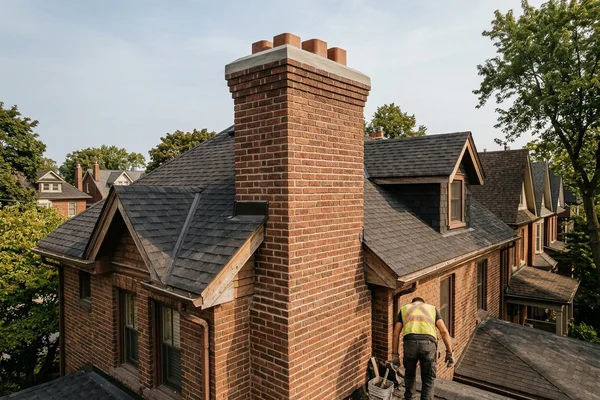
Heritage stacks in Rosedale, Cabbagetown and Old Toronto add another layer. Many are tall multi-flue chimneys shared across a party wall, and rebuilding them properly means matching brick, matching lime mortar and coordinating with the neighbour. North York and Scarborough bungalows from the 1950s and 60s have a different pattern: original crowns that were never built with an overhang, now 60 or more winters old.
Our rule on chimney mortar
The mortar should always be softer than the brick. On heritage brick that means lime-rich mixes; on modern brick it means ASTM C270 Type N. We never repoint soft brick with hard cement.
Chimney Repair vs Rebuild: How We Decide
We do not default to a rebuild. The drone inspection and attic check tell us how deep the damage goes:
- Crown cracked, brick sound: replace the crown and seal the flue. This is the cheapest fix and buys decades.
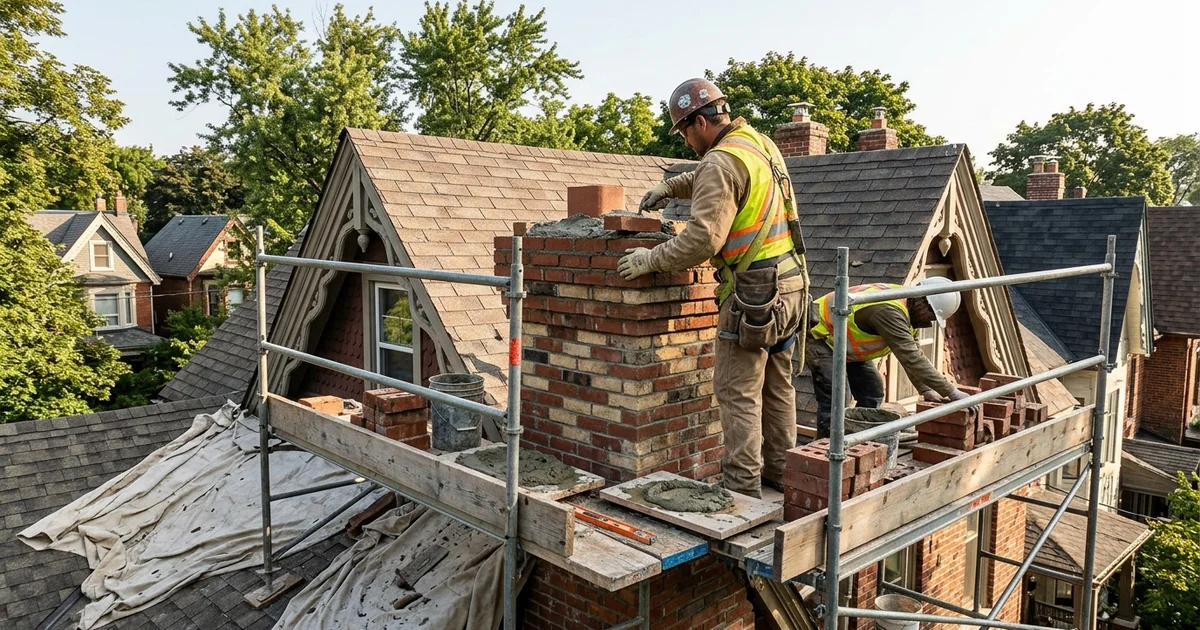
- Top few courses spalled or loose: take down to sound brick, relay, new crown.
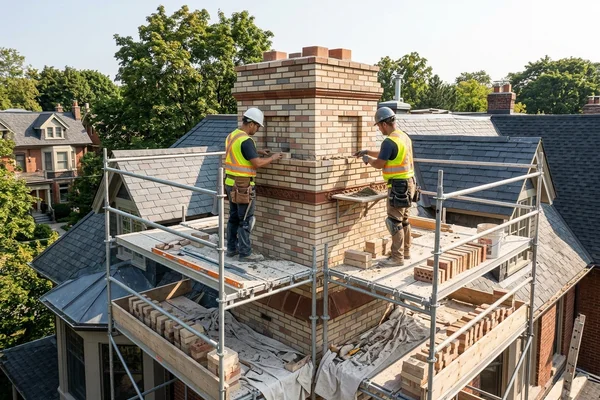
- Lean, failed beds or damage below the roofline: full teardown to sound masonry and rebuild, usually with stamped drawings.
DIY Patching vs Professional Chimney Repair
Roof work at chimney height is dangerous, and the common DIY fixes make things worse. Smearing roof tar or caulking over a cracked crown traps water in the brick. Patching joints with bagged mortar from the hardware store puts hard cement against soft brick. Silicone around flashing fails within a season.
A professional repair fixes the cause: it sheds water off the crown, keeps the mortar softer than the brick and seals the roof junction with proper step and counter flashing. It also comes with a permit where one is needed, a BCIN sign-off on structural work and a 10-year workmanship warranty you can hand to the next buyer of your home.
Chimney Work for Heritage, Suburban and Commercial Buildings
- Heritage homes: Victorian, Edwardian and Georgian chimneys in Heritage Conservation Districts get brick and lime mortar matched, sample approval and an archived recipe.
- Suburban homes: 1950s-80s bungalows and detached houses mostly need crown replacement, repointing and flashing, often paired with brick repair.
- Multi-unit and commercial: we schedule around tenants, provide WSIB and liability documents up front and phase work across several stacks.
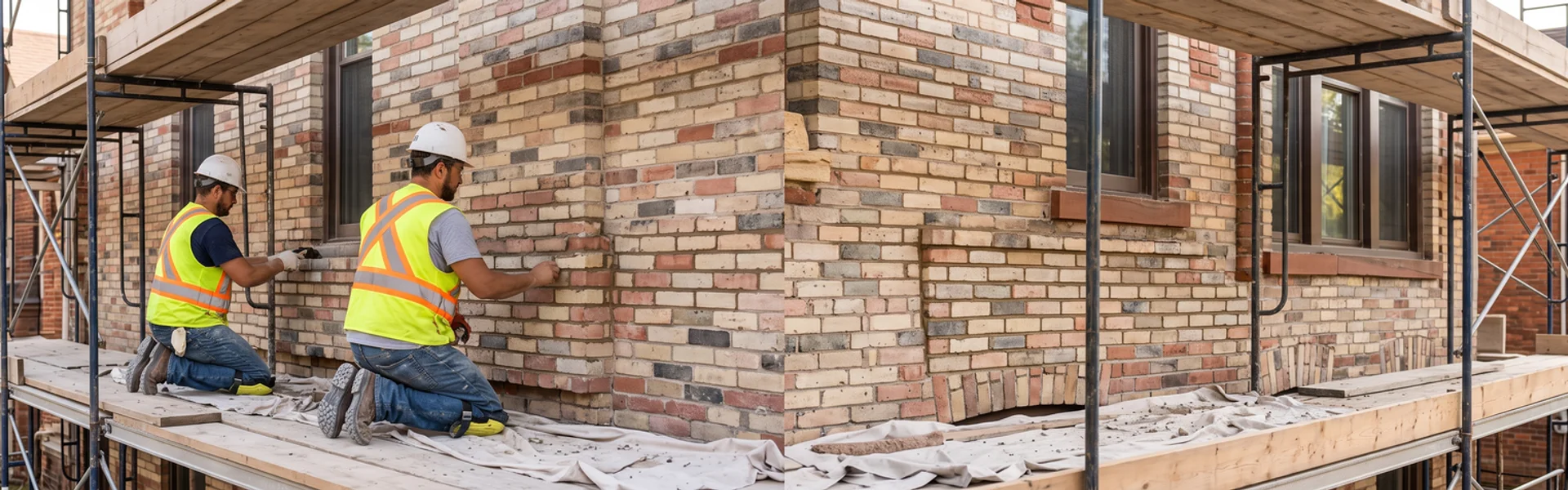
If your mortar joints are failing on the rest of the house too, ask about tuckpointing while the scaffold is already up. It is usually cheaper to do both at once.
Chimney work is the core of our chimney repair Toronto service, with a 4-hour emergency response when a stack is unsafe.