Interlock That Stays Level
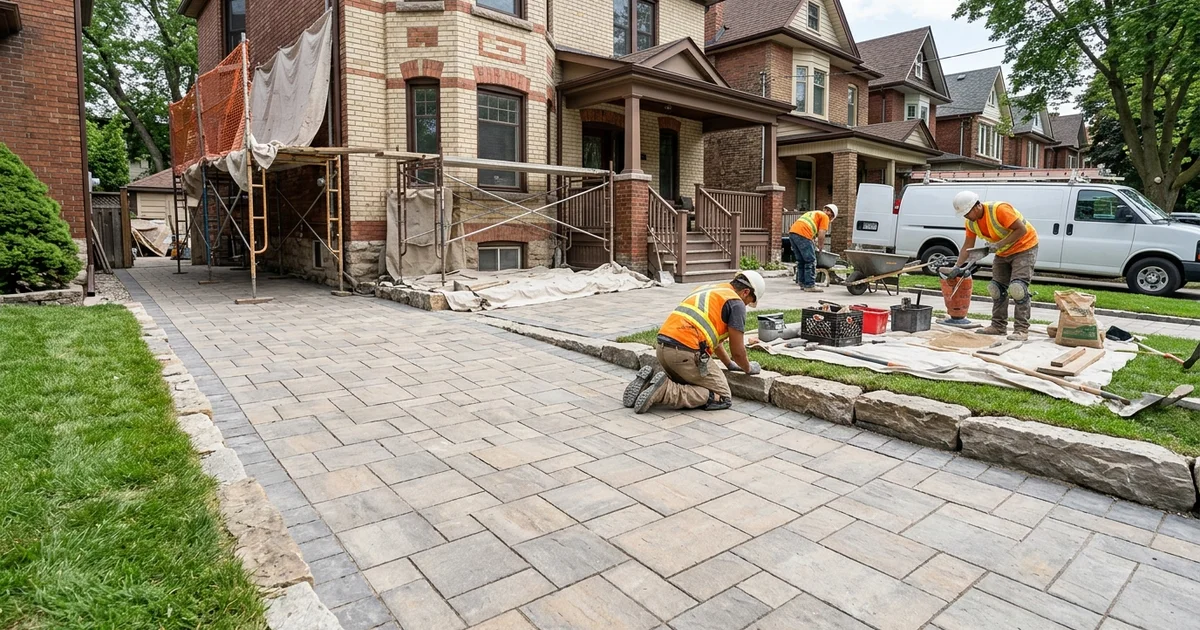
Interlocking concrete pavers look great when new. Whether they still look great after five Toronto winters depends almost entirely on what is underneath. Sinking, heaving and spreading interlock is nearly always a base problem.
What Goes Under Good Interlock
| Layer | Purpose | Sign it was done wrong |
|---|---|---|
| Excavated subgrade | Removes soft topsoil | Pavers sink in patches within a few seasons |
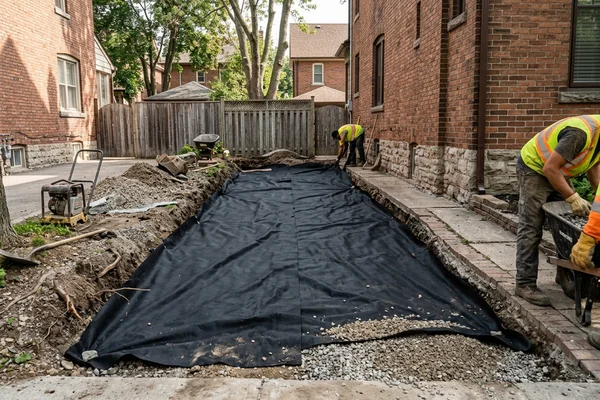
| Geotextile | Separates base from subsoil | Clay works up into the base and it loses strength |
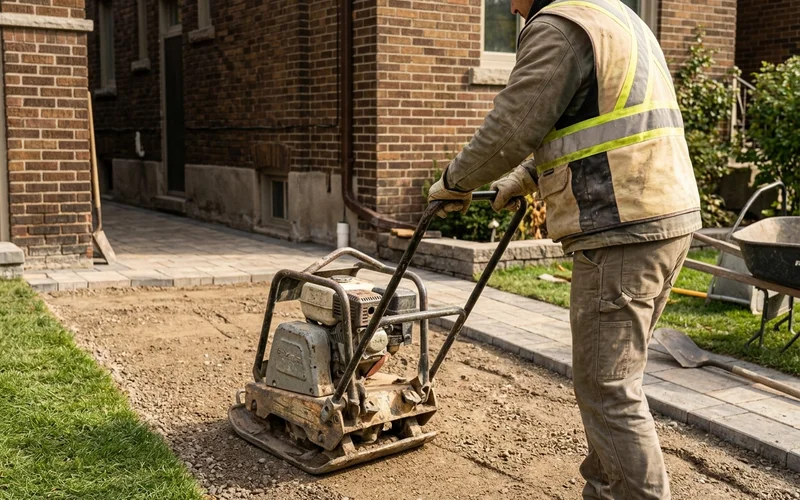
| Granular A base | Load-bearing crushed stone, compacted in lifts with a plate compactor | Ruts where car tires sit and frost heave in winter |
| Bedding layer | Even bed for pavers | Rocking pavers and uneven joints |
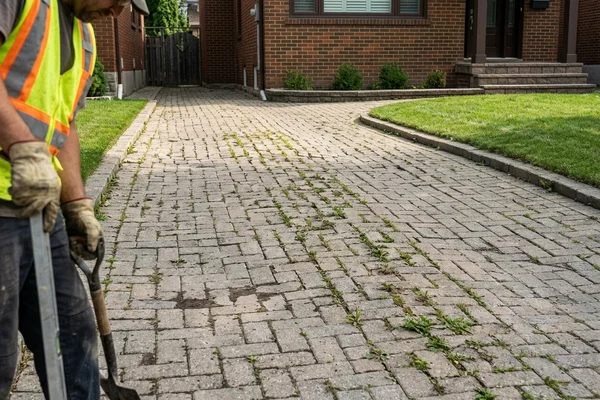
| Pavers + polymeric sand | Locked surface that resists weeds | Weeds, ants and joint sand washing out |
| Edge restraint | Stops pavers spreading | Edges creep outward and joints open up |
Relaying Sunken Interlock
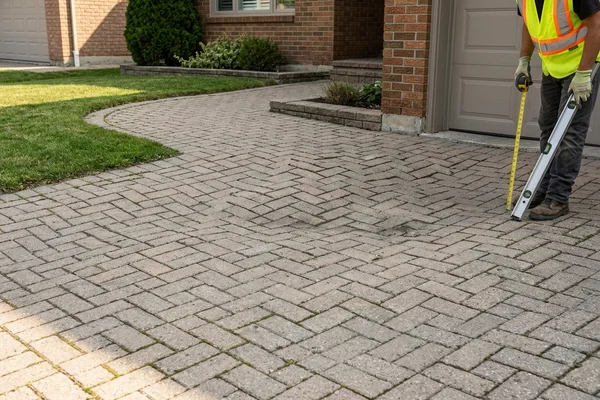
If your pavers are in good shape but the surface has sunk or rolled, we lift them, rebuild the base and relay the same pavers. It costs less than new paving and fixes the real problem.
Drainage slope
Every driveway and patio we build has a drainage slope away from the house, so water does not end up against your foundation.
For natural stone steps and entries, see stone masonry. For a seamless stone look, see Jewelstone.
Interlock is built by the same Toronto masonry crews that lay our natural stone steps, with the base detailed for Toronto frost.