Foundation Problems in Toronto Homes
Toronto foundations range from 1880s rubble stone to postwar concrete block to modern poured concrete. Each fails in its own way, but the cause is almost always water: hydrostatic pressure from saturated soil, frost heave in shallow footings, or drainage that stopped working decades ago.
Common Foundation Problems
| Problem | Typical in | What it means |
|---|---|---|
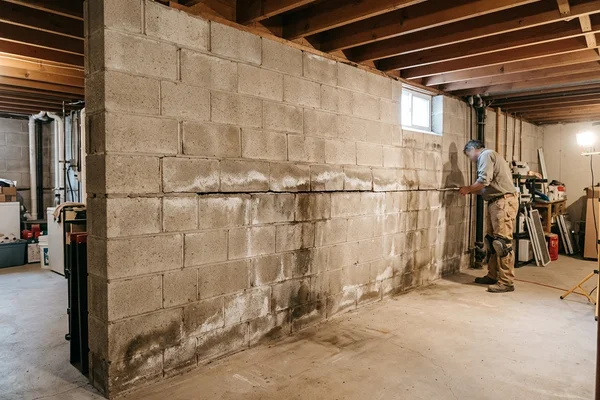
| Bowing block wall | 1950s-70s homes | Soil pressure pushing the wall in |
| Horizontal crack | Block foundations | Often paired with bowing |
| Settling corner | All eras | Footing movement, poor drainage |
| Crumbling rubble wall | Pre-1920 homes | Mortar washed out by water |
| Leaking crack | Poured concrete | Water path through the wall |
How We Repair Foundations
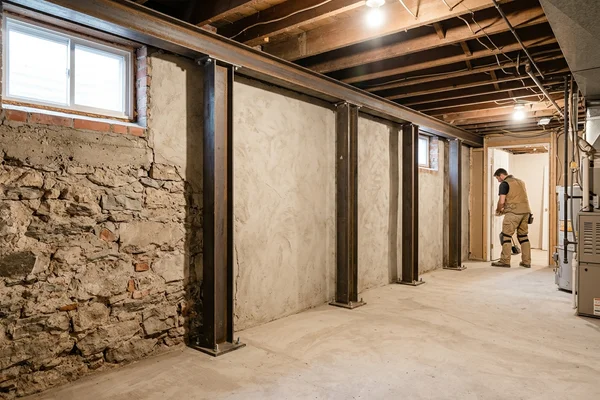
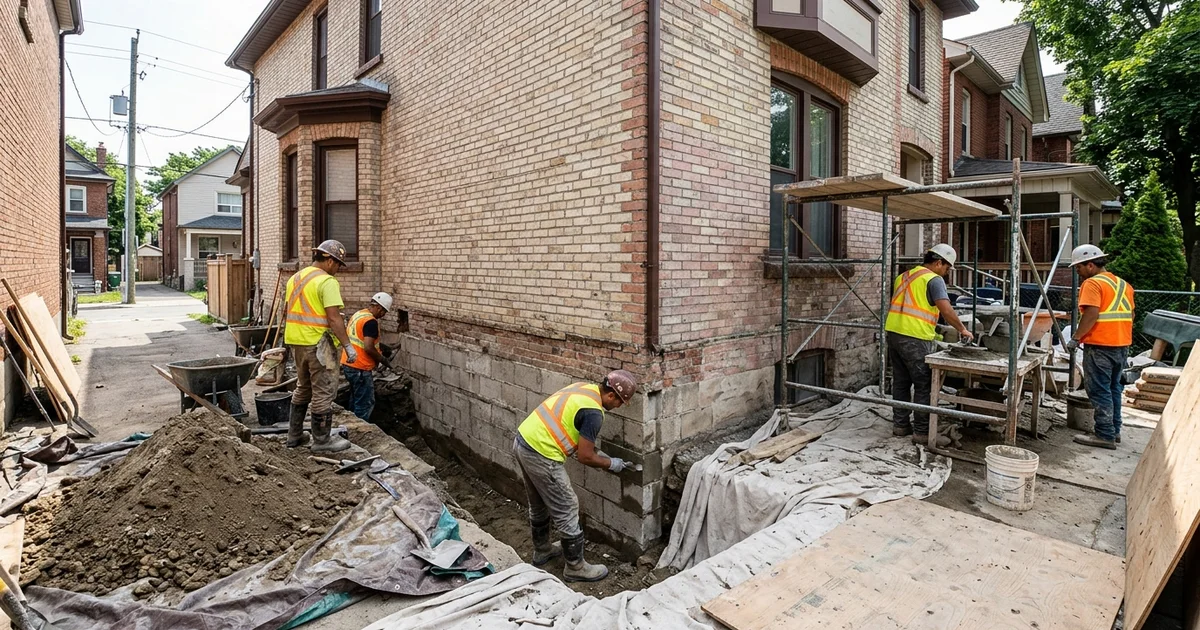
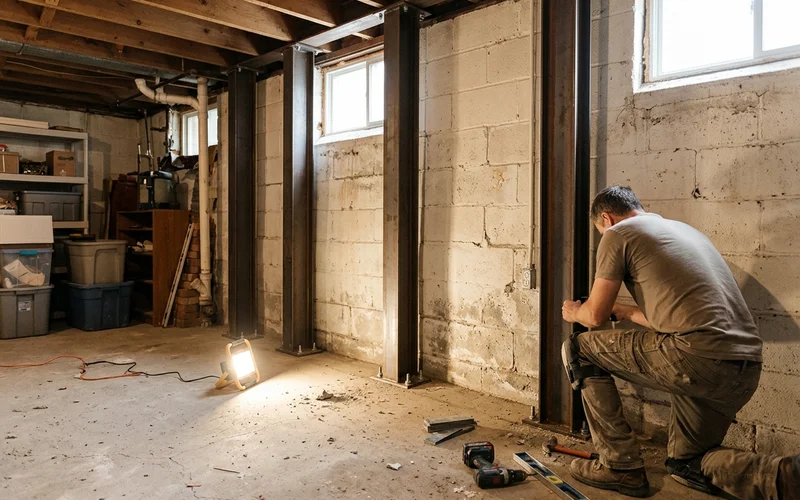
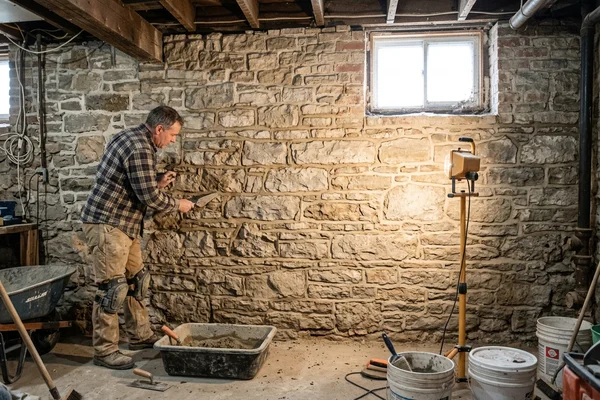
Bracing stops bowing block walls from moving further. Partial rebuilds replace sections that have moved too far. Rubble wall repair repoints old stone foundations with compatible mortar. Exterior waterproofing with a dimple membrane and new weeping tile relieves water pressure. For single leaking cracks, trenchless injection from inside is usually enough.
Emergency water response
Sudden water in the basement? Call our 24-hour line. We are on site within 4 hours in Toronto, map the water with infrared and stop it, then quote the permanent repair in writing.
Above Grade: Parging
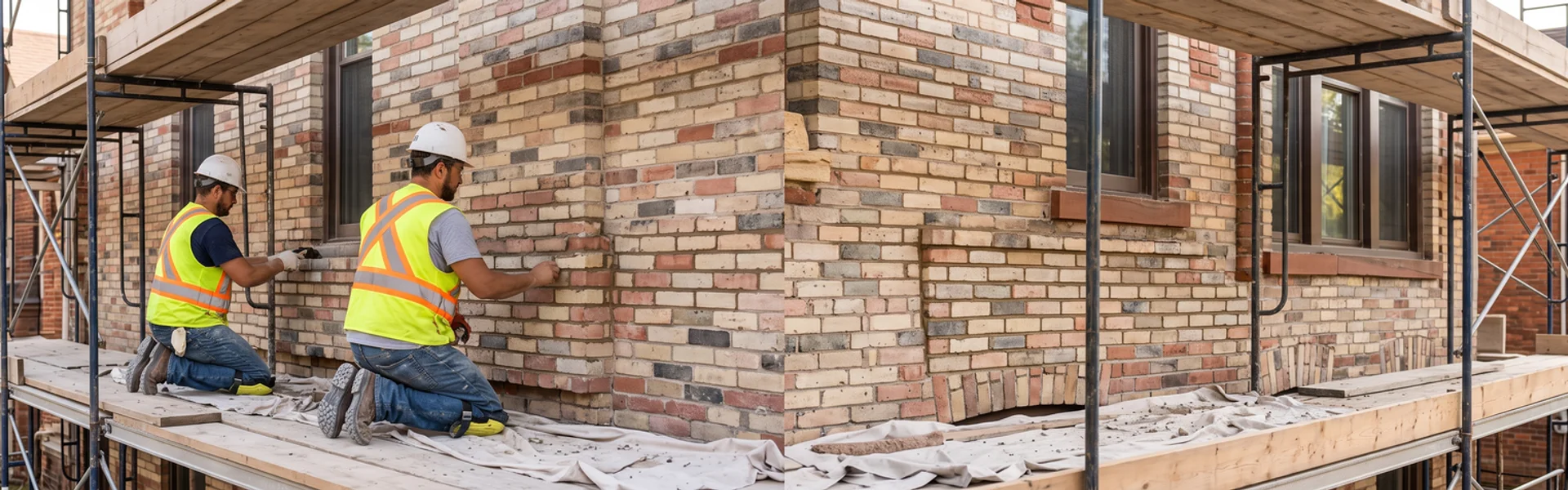
Once the foundation is sound, the exposed part needs parging to protect it. We do both in one job when needed.
Foundation work is planned by the same Toronto masonry team that repairs the brick above it, so the whole wall is assessed in one visit.