Why Foundation Cracks Leak
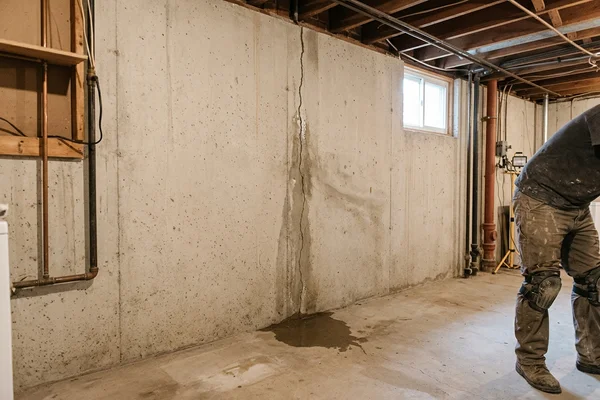
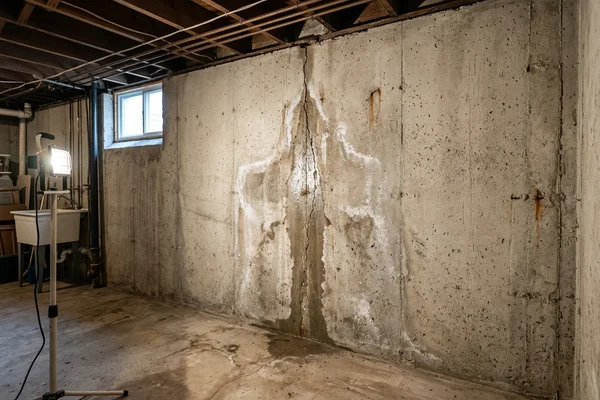
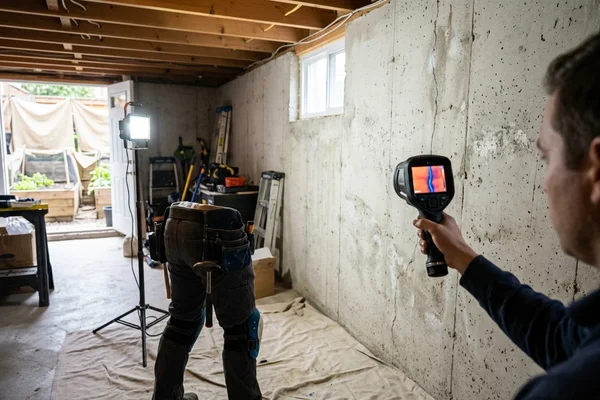
Poured concrete foundations crack as they cure and as the house settles. Most of these are thin vertical hairline cracks. They do not matter until water finds them. When the soil outside is saturated after snowmelt or heavy rain, hydrostatic pressure pushes water through the crack and into your basement.
Types of Foundation Cracks
| Crack | What it usually means | Typical repair |
|---|---|---|
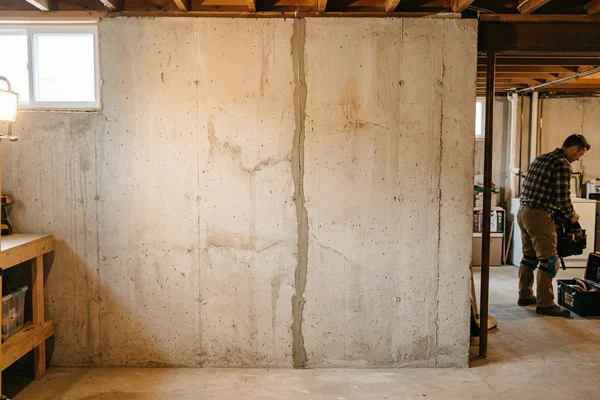
| Hairline vertical | Shrinkage, normal | Polyurethane injection if leaking |
| Wider vertical | Settlement | Injection, monitor width |
| Stair-step (block) | Settlement or pressure | Assessment, possible bracing |
| Horizontal | Soil pressure, bowing | Structural assessment |
How Trenchless Injection Works
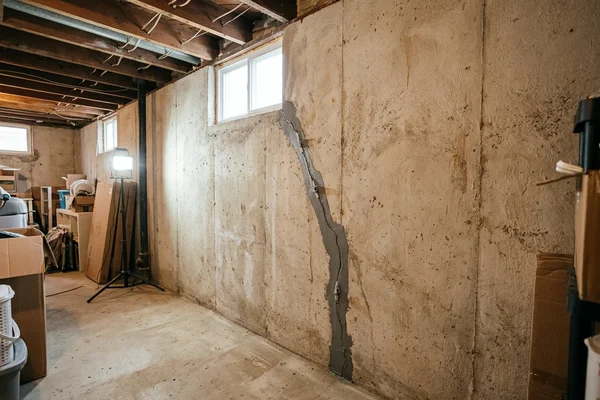
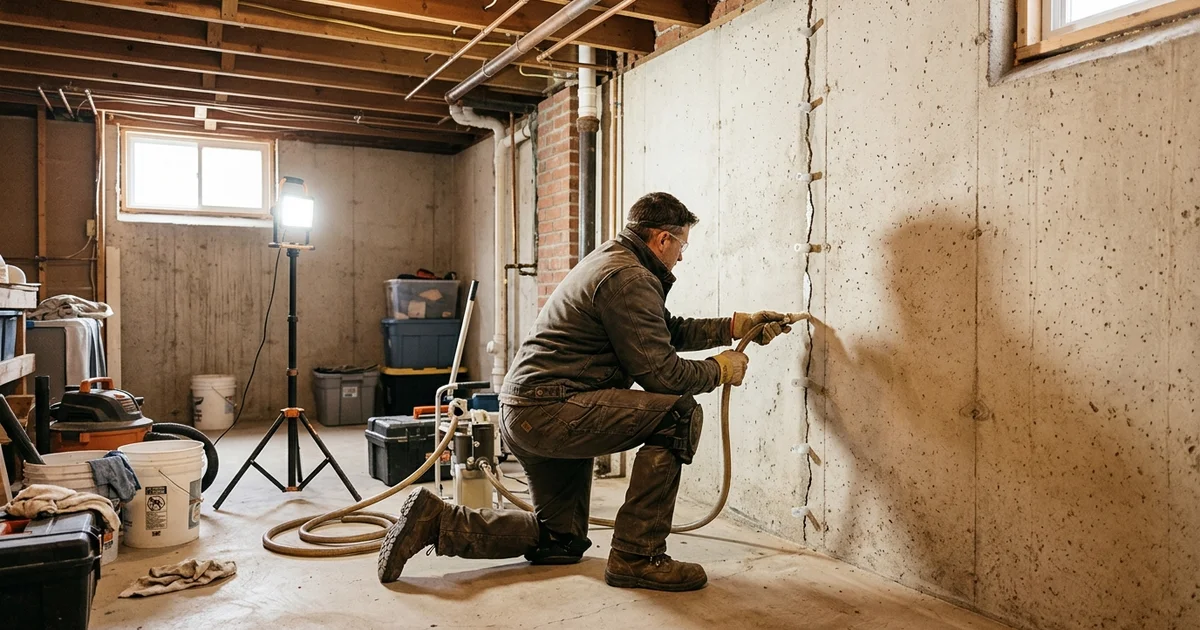
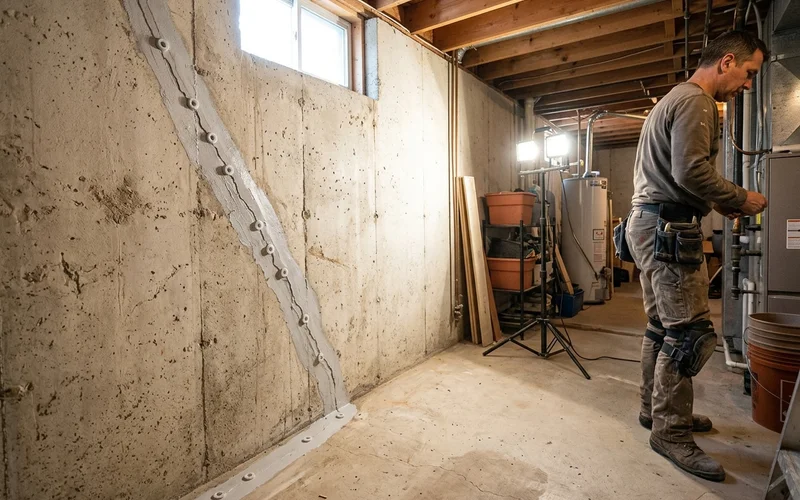
We clean the crack, set injection ports along it and seal the surface. Then we inject polyurethane, which expands and stays flexible, or epoxy, which bonds and adds strength, starting at the bottom and working up until resin comes out of the next port. That tells us the crack is filled through the wall. The water path is closed from the inside, with no excavation.
We tell you when injection is not enough
Horizontal cracks, bowing walls and cracked block foundations usually need more than injection. We will say so and point you to foundation repair rather than sell a fix that will not hold.
After the Crack Is Sealed
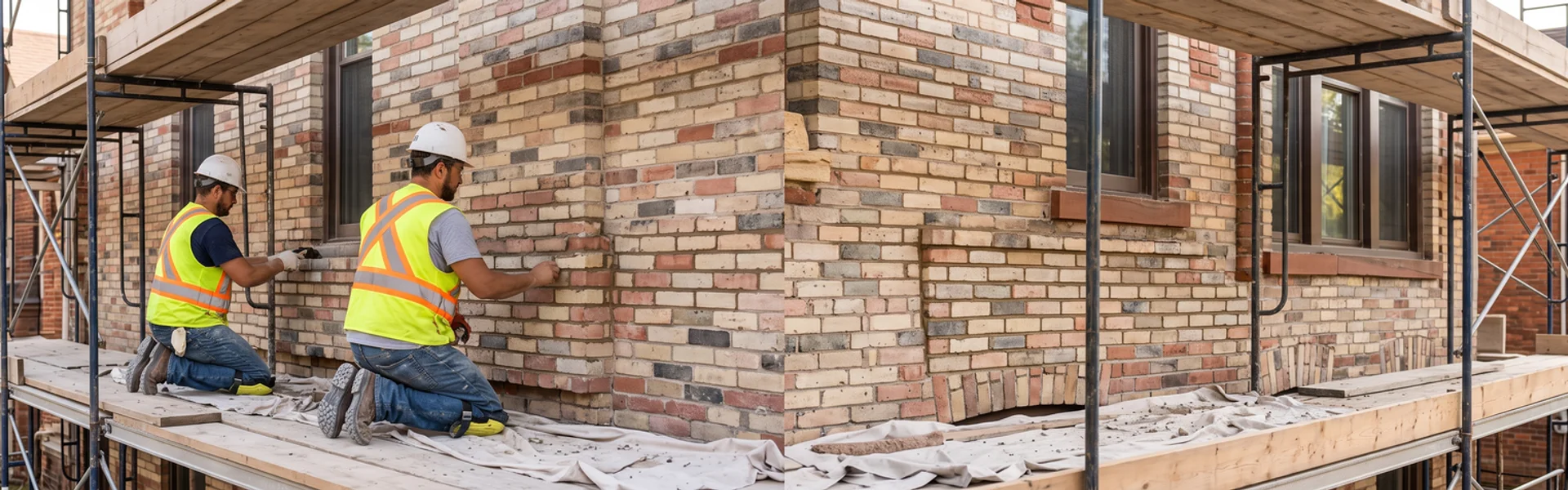
Many homes with leaking cracks also have tired parging outside. Fixing both at once protects the foundation inside and out.
Crack injection is one of the foundation services our Toronto masonry team runs year-round, with emergency response for active leaks.