What Makes Heritage Masonry Different
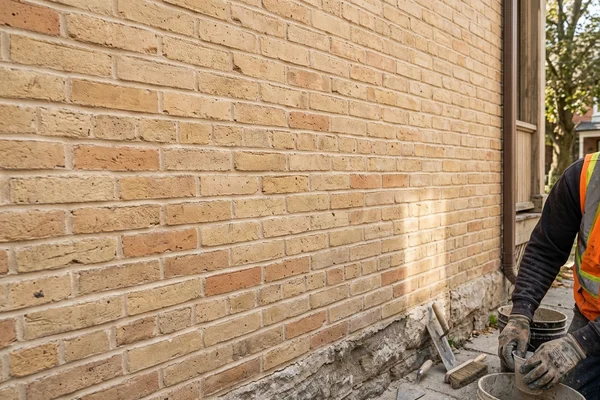
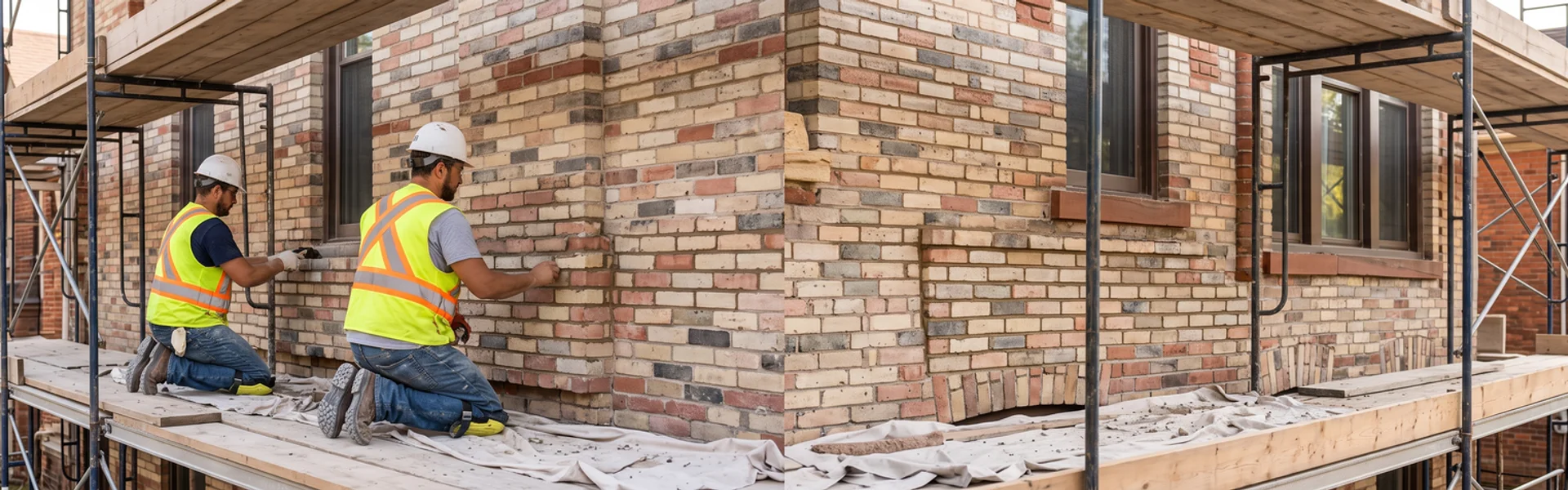
Heritage masonry is about compatibility. A Victorian brick wall in Cabbagetown or an Edwardian facade in Rosedale was built as a system: soft, porous brick laid in soft, breathable lime mortar. The wall stays healthy because water that gets in can get out again through the joints. Heritage work keeps that system working.
That means three things in practice. Mortar matches the original in strength, colour and profile. Original material stays wherever it can, through Dutchman repairs and careful cleaning. And visible changes are approved by the right authority before work starts.
Heritage Rules in Toronto
| Status | What it means | Review |
|---|---|---|
| Listed property | On the City heritage register, not designated | Usually notice for demolition, not routine repairs |
| Designated (Part IV) | Individually protected under the Ontario Heritage Act | Heritage Preservation review for visible alterations |
| HCD (Part V) | Inside a Heritage Conservation District | District guidelines; review for visible changes |
South Rosedale, North Rosedale and Cabbagetown are among the best-known Toronto districts. Outside Toronto, Old Port Credit Village and Old Oakville have their own. Our expeditor confirms your status before we quote.
Mortar Colour Analysis: How We Match
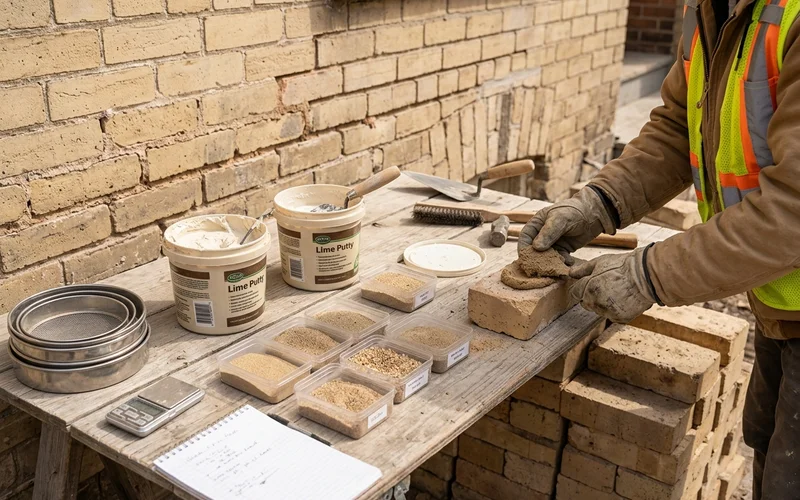
Every heritage job starts with a written mortar colour analysis. We look at the original binder (lime putty, hydraulic lime or early cement), the sand’s colour and grading and the joint profile. Then we mix samples using lime putty, NHL 2 or NHL 3.5, or ASTM C270 Type O, tinted with sand rather than heavy pigment where possible so it ages like the original.
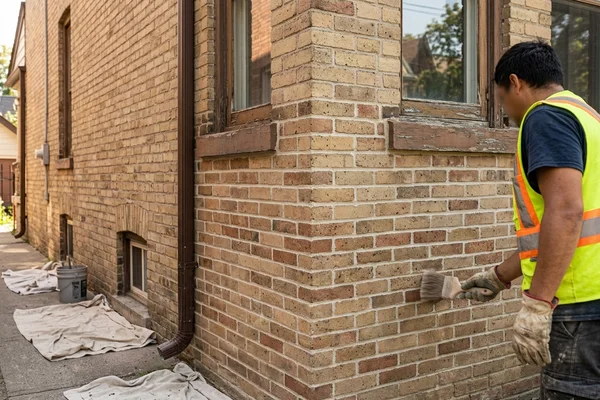
The samples go on your wall as a panel. You approve the match in daylight, often over several days, and the approved recipe is archived. Marty Russo’s lime mortar colour matching is used as a reference by Toronto Heritage Preservation.
Why vapour permeability matters
Heritage walls have no air gap or membrane. They manage water by letting it evaporate through the masonry. Cement, sealers and latex paint block that, so water stays in the brick and freezes. Every material we use is chosen to keep the wall breathing.
Removing Hard Cement Without Damaging Brick
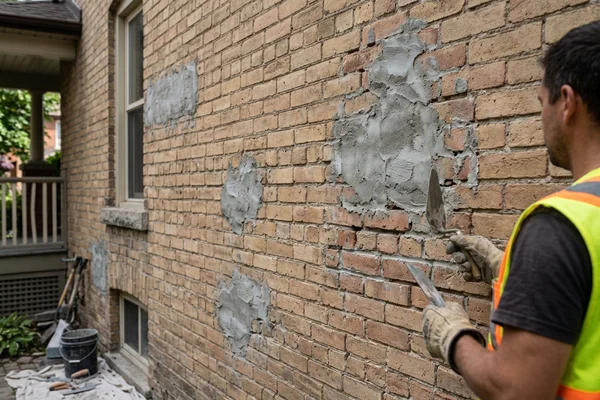
The most common heritage problem in Toronto is a 1970s or 80s repointing job in grey Portland cement. Removing it is slow work. We use heritage pointing hammers, plugging chisels and only carefully controlled cutting with HEPA dust extraction, so the soft brick edges survive. Rushing this step with a grinder ruins the brick and widens the joints.
Common Heritage Projects We Do
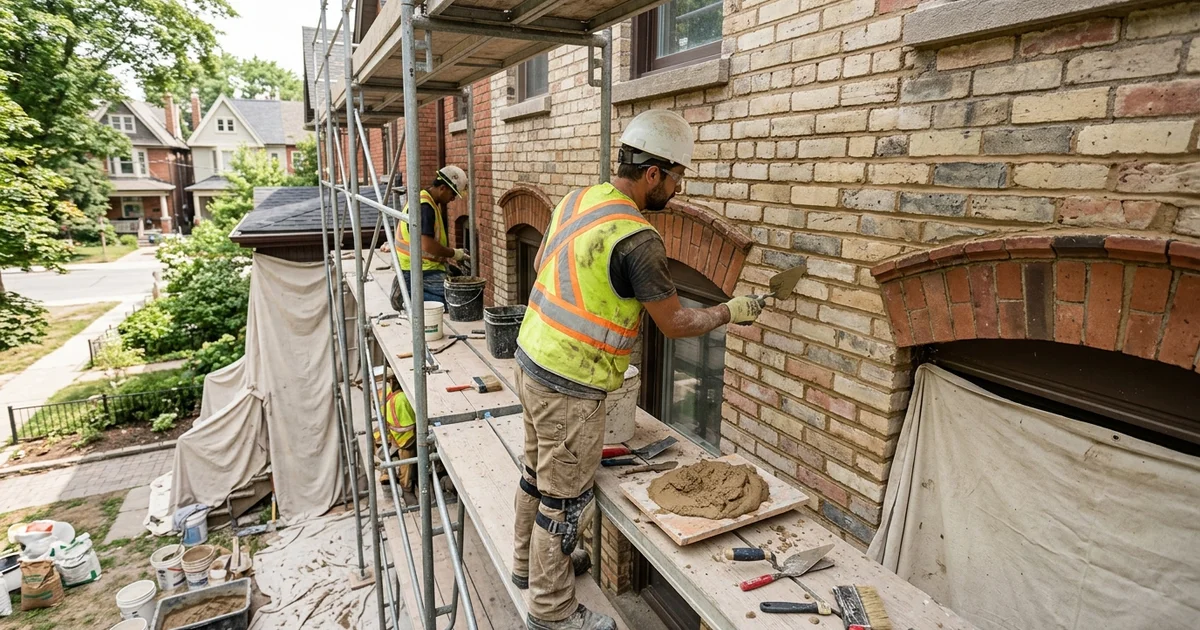
- Full facade lime repointing and tuckpointing on bay-and-gable fronts
- Heritage chimney rebuilds with reclaimed brick and matched lime mortar
- Stone sill, lintel and base repairs with matching limestone, see stone masonry
- Whole-facade masonry restoration staged over five draws
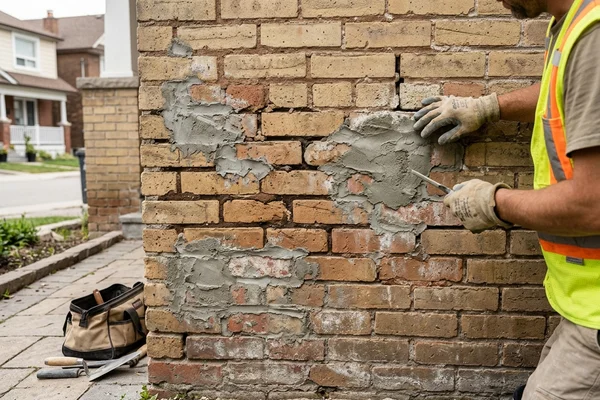
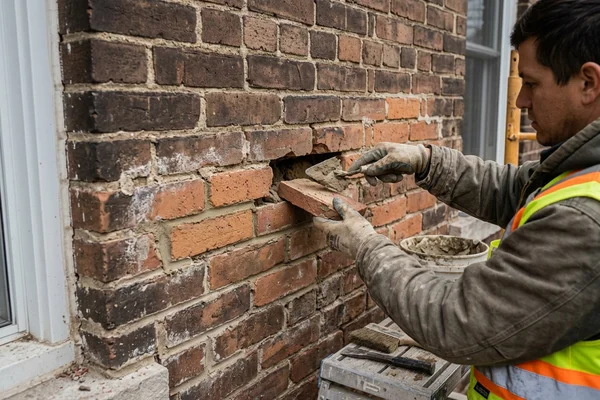
- Dutchman and reclaimed brick repair
Getting Approvals Right
A clear submission is the fastest route to approval. Ours include the written mortar analysis, sample panel photos, a method statement for cement removal and cleaning, and drawings where structure is involved. Our expeditor files with Heritage Preservation and, where needed, Toronto Building and the Committee of Adjustment, and follows up so the approval arrives on schedule.
Heritage work is where our Toronto masonry practice started in 2003, restoring Victorian brick in Rosedale and Cabbagetown.