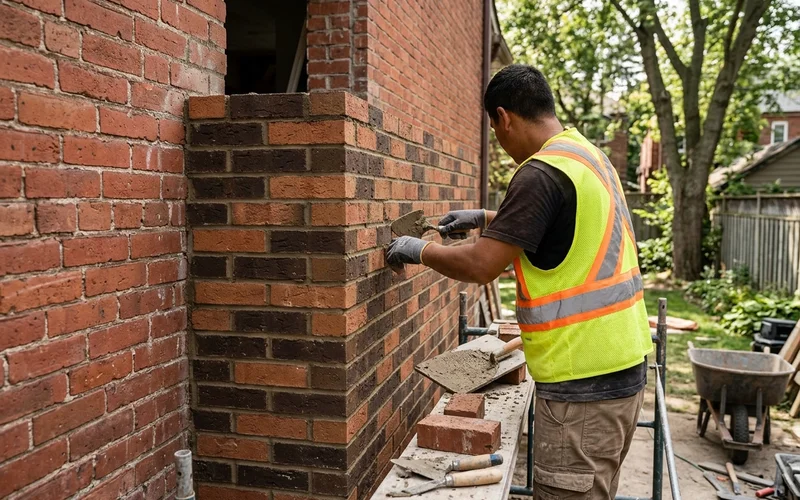
Bricklaying for New Builds and Additions
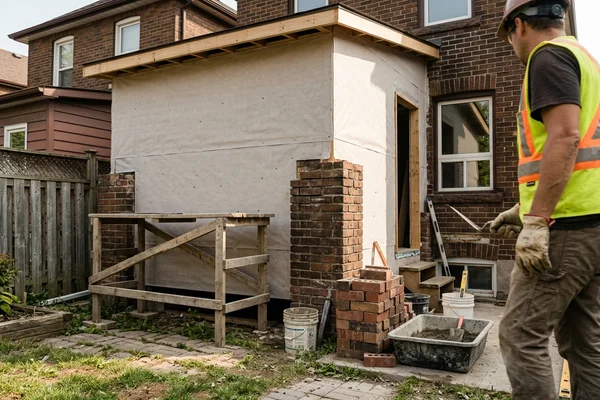
Toronto’s infill boom means more new brick going up next to century-old houses. Whether it is a full infill home, a rear addition on a Victorian semi or a new garage, the brickwork has to meet OBC Part 9 and, on additions, look like it belongs.
What Good New Brickwork Needs
| Detail | Why it matters | What happens if it is skipped |
|---|---|---|
| Base flashing and weep holes | Lets water behind the veneer drain out | Water sits at the base, rots the sill plate and stains the brick |
| Ties at code spacing | Keeps veneer connected to the frame | Veneer can bow or pull away from the wall over time |
| Proper air space | Allows drainage and drying | Mortar droppings bridge the cavity and moisture reaches the sheathing |
| Lintels sized and bearing correctly | Carries brick over openings without cracking | Step cracks open above windows and doors |
| Movement joints | Stops cracking from shrinkage and thermal movement | Long vertical cracks form at corners and long runs |
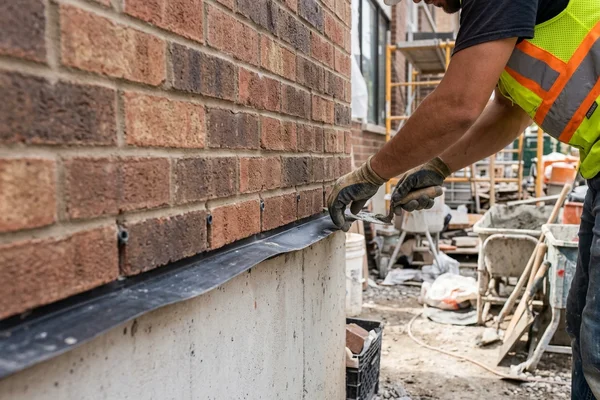
Matching Brick on Additions
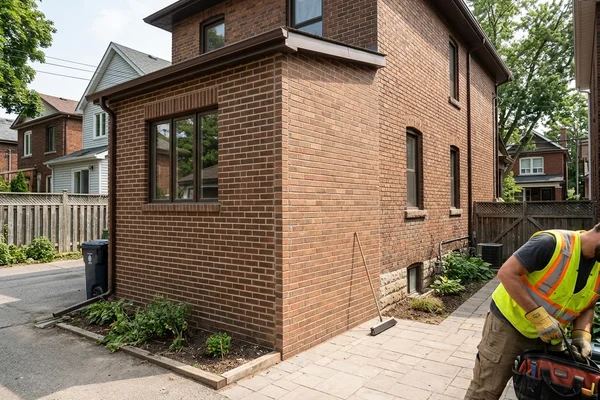
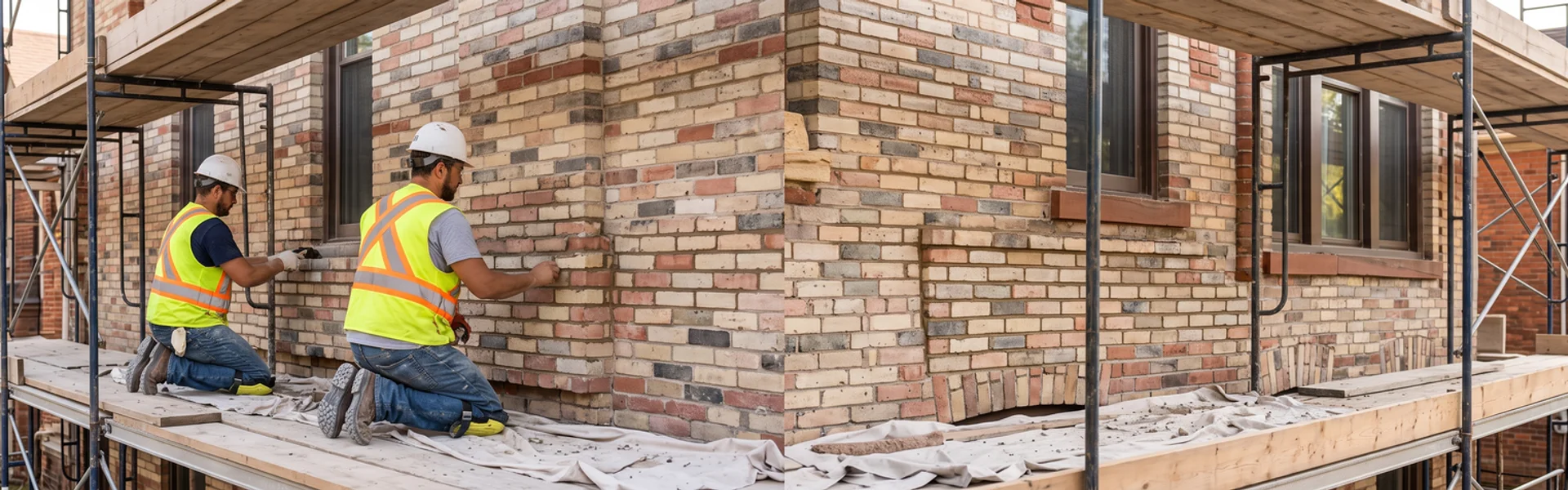
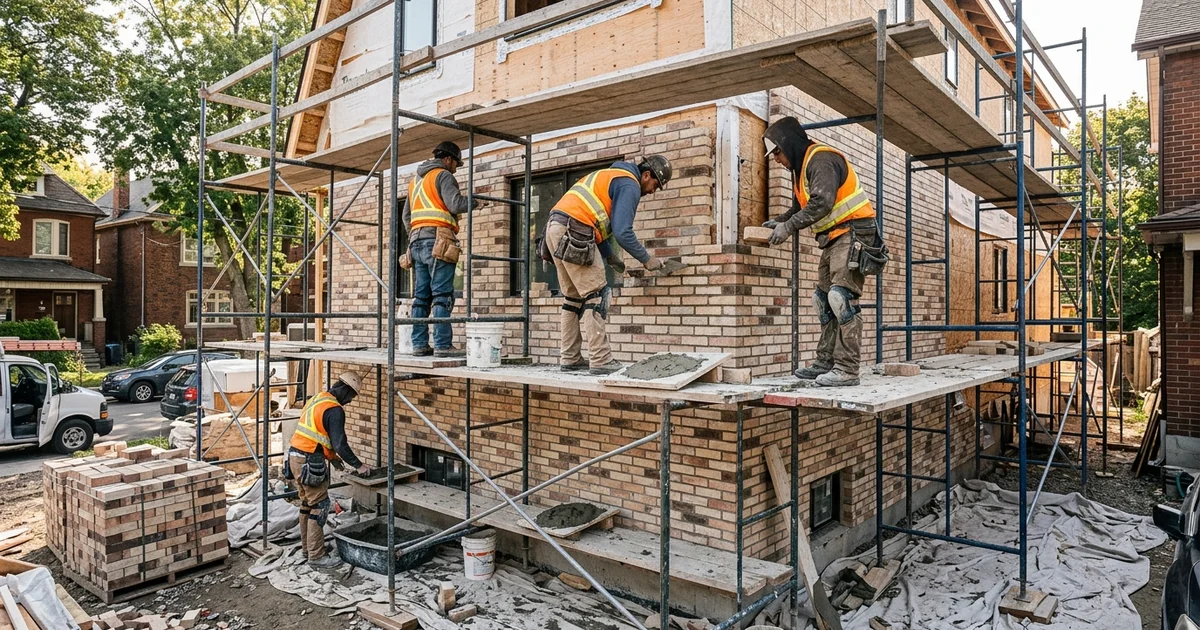
A mismatched addition can hurt a home’s value. We look at size, colour range, texture and the mortar joint. We blend brick from several pallets on site so colour variation is even, match mortar colour to the original, and tooth in new courses so there is no straight seam where old meets new. Where a perfect match is not made anymore, we source reclaimed brick or recommend a deliberate contrast that looks intentional.
For GCs
We give you a schedule and hold it. Stamped lintel and structural details come with the job, and certificates are on file before day one.
Related Work
For repairs to existing walls, see masonry repair. For stone features on new builds, see stone masonry. For larger commercial scopes, see masonry contractor.
New brickwork is built by the same crews behind our Toronto masonry restoration work, so additions are laid to match the house they join.