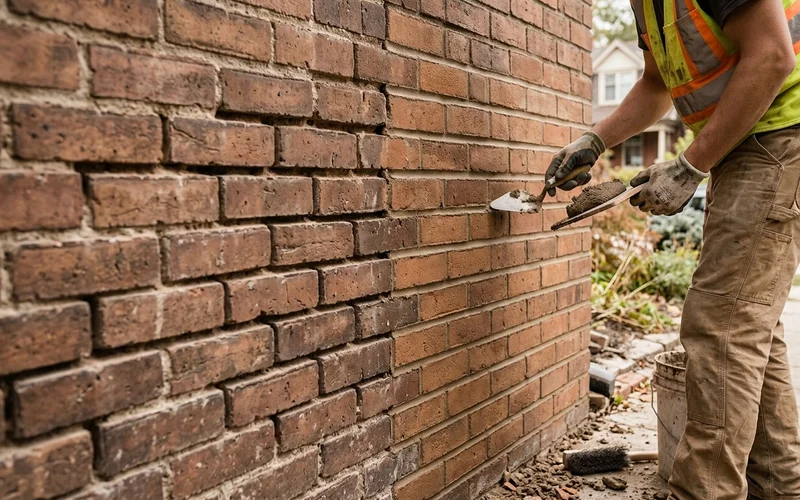
What Is Repointing?
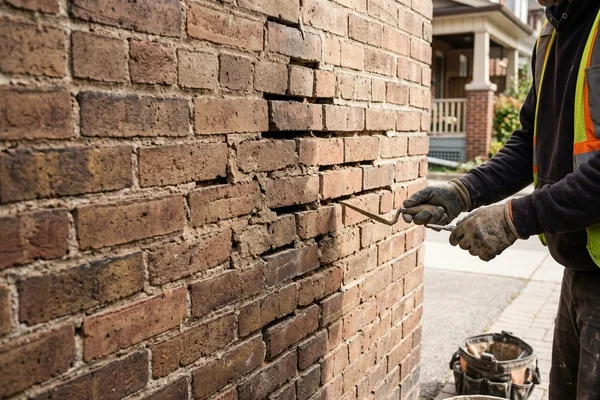
Repointing means removing deteriorated mortar from the joints of a brick or stone wall and replacing it with new mortar. It is the most important routine maintenance a masonry wall gets. When joints fail, water gets into the wall, freezes and starts breaking down both the mortar and the brick.
Mortar is meant to be sacrificial. It should be softer than the brick, wear out first and be renewed every few decades. Repointing renews that layer before the brick itself is damaged.
Signs Your Walls Need Repointing
- Mortar recessed well back from the brick face
- Crumbling, sandy mortar you can scratch out with a key
- Gaps, holes or missing mortar, especially at the top of walls and chimneys
- Damp patches, peeling paint or efflorescence inside
- Brick spalling next to failed joints
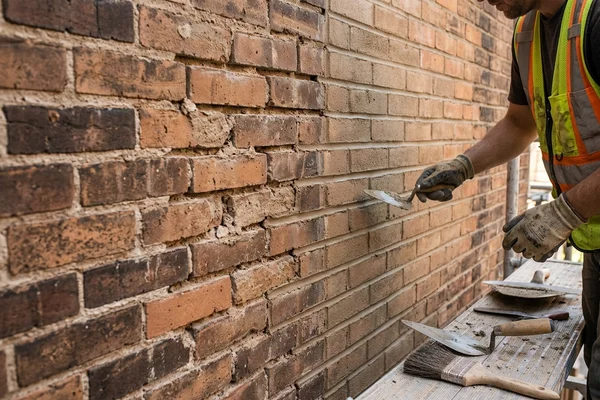
How We Repoint
| Step | What we do | Why it matters |
|---|---|---|
| Rake | Remove mortar to 2-2.5x joint width | Gives new mortar enough depth to lock in |
| Clean | Brush and rinse dust from joints | Dust stops new mortar bonding |
| Dampen | Wet joints lightly | Stops brick sucking water from fresh mortar |
| Fill in layers | Pack mortar in lifts | Avoids voids that trap water |
| Tool | Finish flush or concave | Sheds water off the joint face |
Why depth matters
Cheap repointing skims mortar over the surface. It looks fine for a season, then falls out with the first freeze-thaw cycles. Proper raking depth is what makes repointing last.
Repointing and Tuckpointing Together
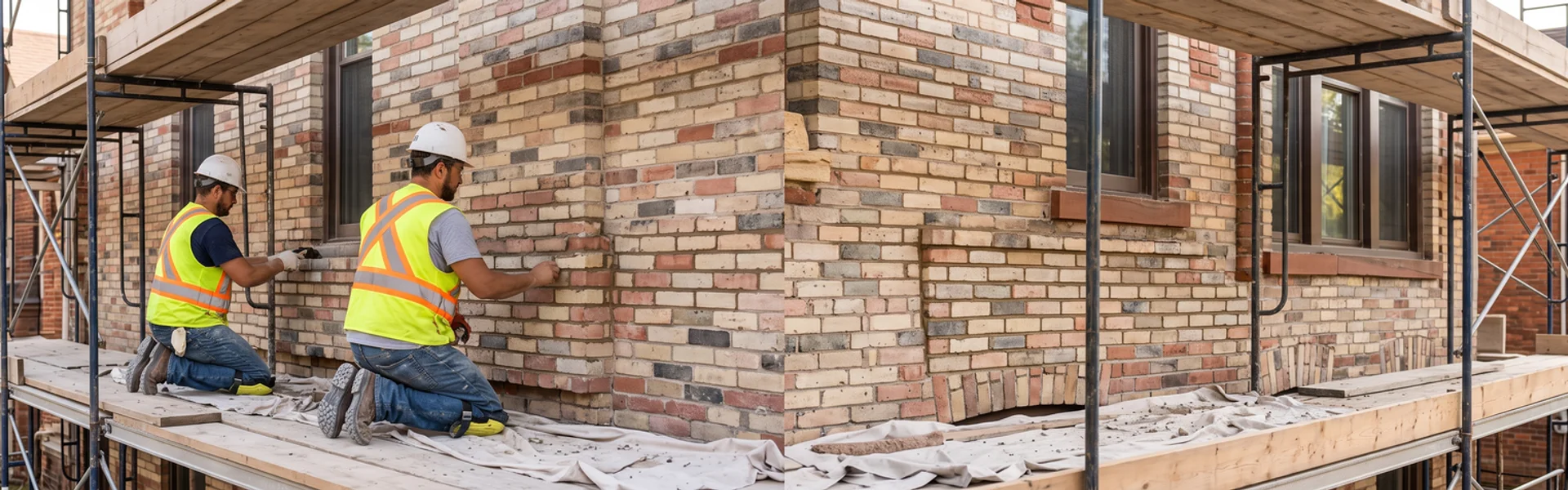
On many Toronto heritage homes, repointing is the first stage and tuckpointing is the finish. If you want the facade to look as it did when built, we can do both in one mobilization. On walls with damaged brick, we pair repointing with brick repair.
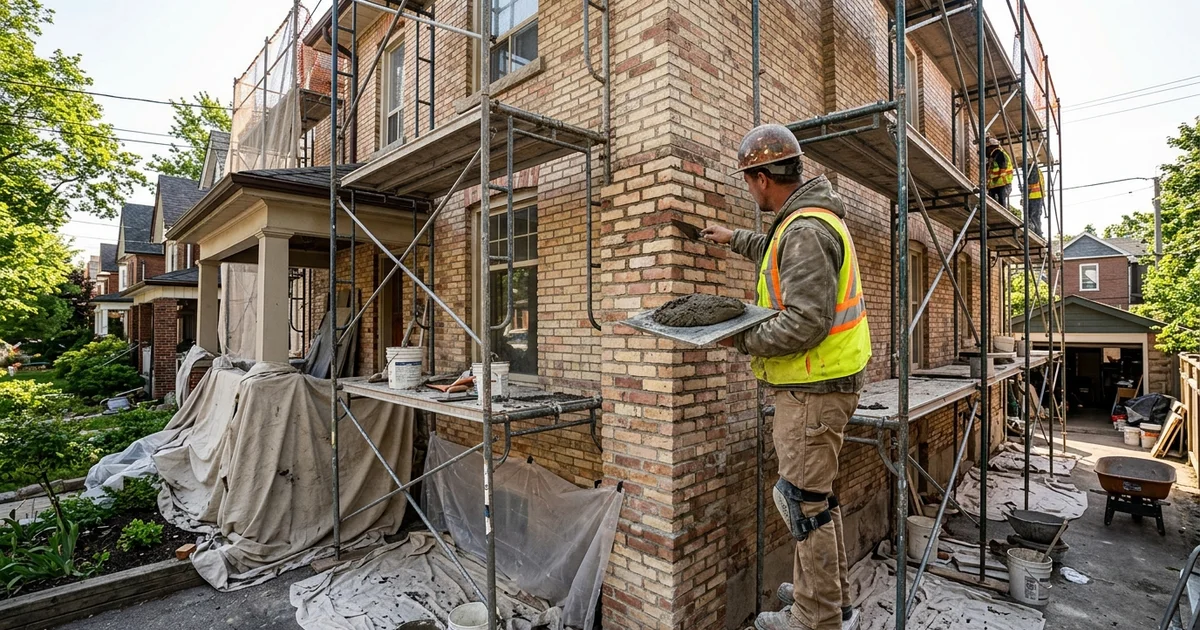
Repointing is routine work for our Toronto masonry crews, who mix each batch to match the strength and colour of your existing wall.